🌍 Renewable Energy System Designs
☀️ Activity 1: Rooftop Solar PV System (5 kW)
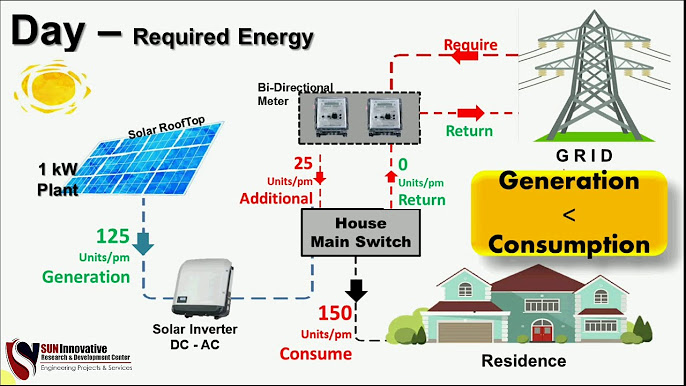
Image: Activity_1.jpg (local)
Completeness of block diagrams (clear, logical flow).
- Source of energy: Solar irradiance incident on rooftop PV modules (monocrystalline preferred for higher efficiency). System sized to ~5 kW peak (STC) to meet daytime load and enable grid export.
- Conversion process: PV modules generate DC → MPPT controller optimizes voltage/current → inverter converts to synchronized AC for loads or grid. Batteries (Li-ion) store surplus power; charge controller and BMS manage storage and protection.
- Output / utilization: Powers lighting, fans, refrigerators, and small appliances. Critical loads run during outages via stored energy. Surplus is exported under net-metering.
- Real-world relevance: Reduces bills, improves energy security, and supports sustainable housing. Ideal for residential or institutional rooftops.
- Design notes: Proper string sizing (Voc/Isc), shading analysis, earthing, lightning protection, and inverter compatibility must be verified for reliability and efficiency.
🌤️ Activity 2: Hybrid Solar–Wind System for Rural Health Clinic
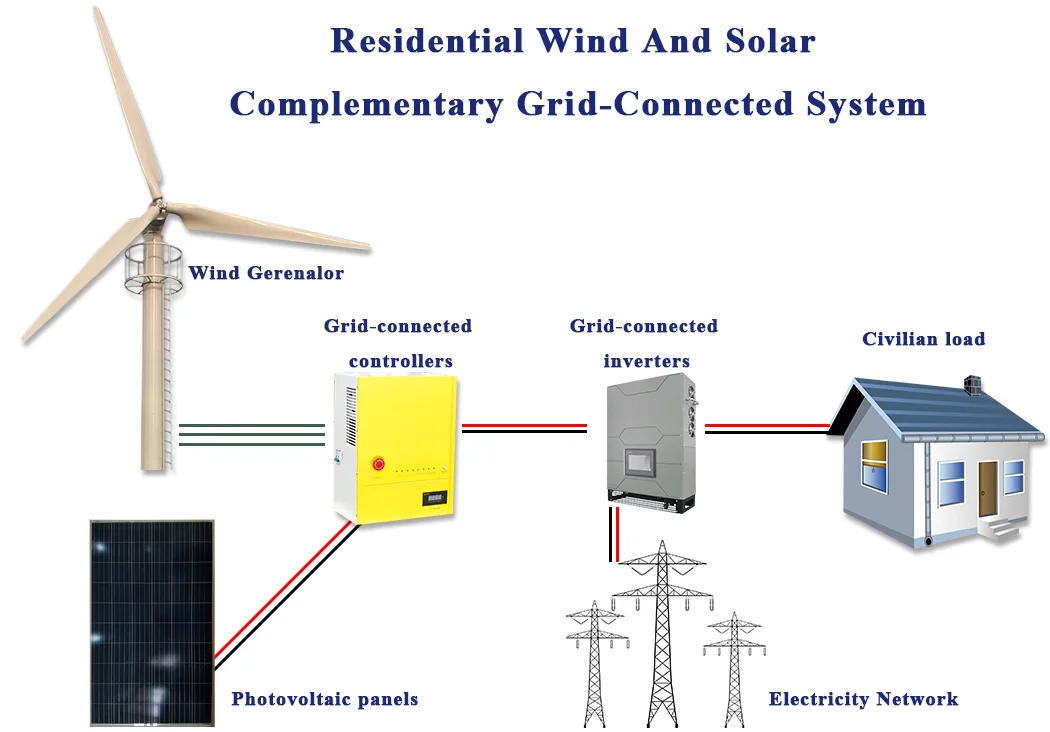
Image: Activity_2.jpg (local)
Completeness of block diagrams (clear, logical flow).
- Source of energy: Hybrid inputs from solar PV and small wind turbine (3–5 kW). Combination ensures reliable power day and night.
- Conversion process: PV produces DC; wind turbine generates variable AC, rectified by a hybrid controller managing power flow and battery charging. Inverter provides pure sine AC output and synchronizes with backup sources. Monitoring and remote control improve reliability.
- Output / utilization: Continuous power for vaccine refrigeration, lighting, diagnostic devices, and communication systems. Battery autonomy ensures 24–72 hours operation during low-generation periods.
- Real-world relevance: Enables dependable healthcare services in off-grid or weak-grid villages while reducing fuel costs and pollution.
- Design notes: Optimize wind turbine siting, include surge arrestors, perform energy audits, and ensure battery sizing meets load autonomy requirements.
🌊 Activity 3: Ocean Thermal Energy Conversion (OTEC) System
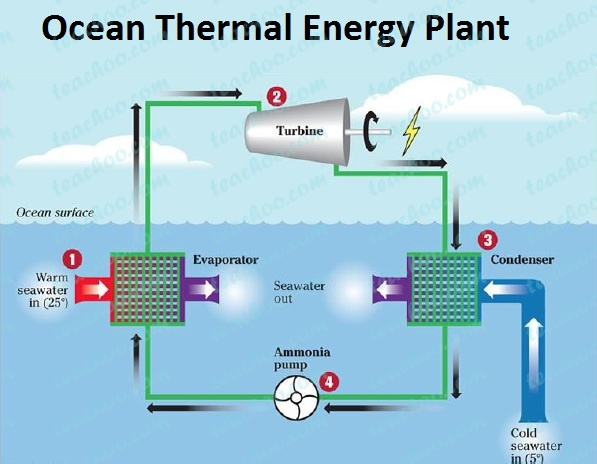
Image: Activity_3.jpg (local)
Completeness of block diagrams (clear, logical flow).
- Source of energy: Thermal gradient between warm surface water (~25–30°C) and cold deep water (~4–5°C) in tropical oceans.
- Conversion process: Warm seawater heats a working fluid (e.g., ammonia) in an evaporator → vapor drives turbine-generator → cold deep seawater condenses vapor, repeating cycle. Closed-cycle OTEC produces electricity continuously.
- Output / utilization: Provides baseload renewable power for islands; co-produces desalinated freshwater, cold water for air-conditioning, and nutrient-rich water for aquaculture.
- Real-world relevance: Offers sustainable, emission-free energy and water solutions for coastal nations, supporting climate resilience.
- Design notes: Key challenges include corrosion, marine biofouling, deep-water pipe design, and high capital costs; hybrid OTEC-desalination systems improve economic viability.
♻️ Activity 4: Biogas Power Generation System
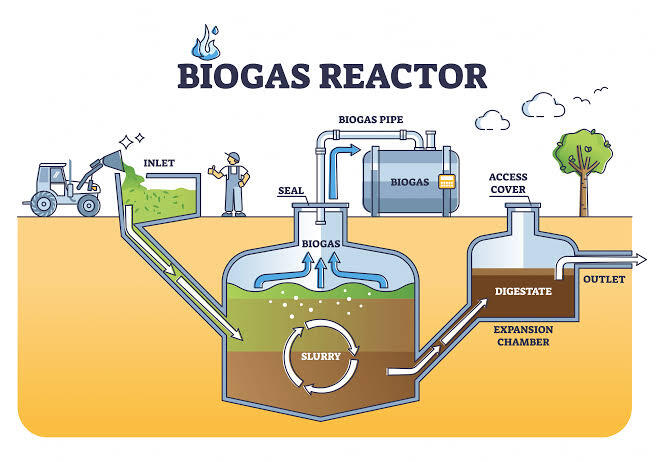
Image: Activity_4.jpg (local)
Completeness of block diagrams (clear, logical flow).
- Source of energy: Organic manure and agro-residues from 100 cattle produce methane-rich biogas (60–70% CH₄) via anaerobic digestion.
- Conversion process: Feedstock enters digester where microbes convert organics into biogas under mesophilic (~35°C) or thermophilic (~55°C) conditions. Gas is cleaned (H₂S/moisture removal) and stored. It fuels an engine-generator or CHP unit for electricity; waste heat maintains digester temperature.
- Output / utilization: Produces electricity for on-site farm loads; digestate serves as organic fertilizer; heat used for water or space heating.
- Real-world relevance: Converts waste into energy and fertilizer, reduces greenhouse emissions, enhances rural sustainability and farm revenue.
- Design notes: Ensure leak-proof digester, proper feedstock ratio (C/N balance), gas cleaning, flame arrestors, and regular maintenance for consistent performance.